
Product Catalog
Wheels
Wheels by material and tread — polyurethane, forged steel, TPR and V-groove track wheels.
Product family
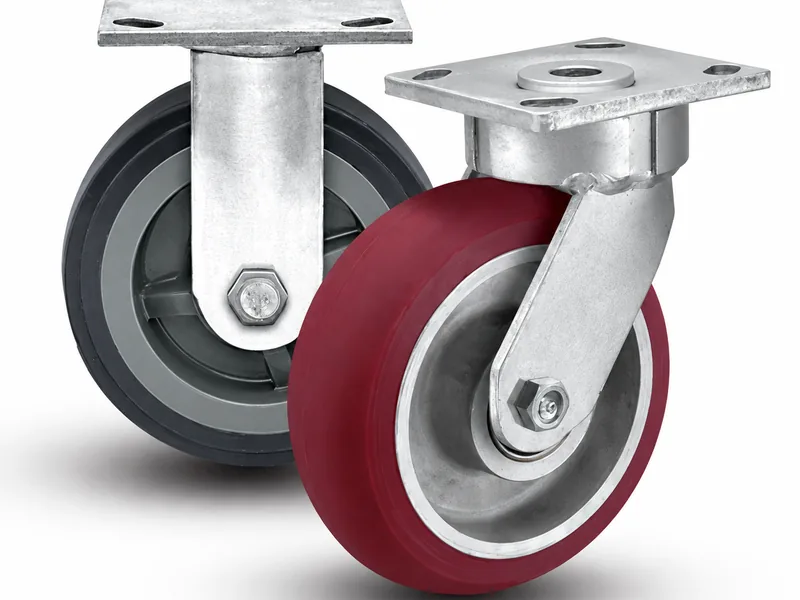
Polyurethane Caster Wheels
Cast and injected PU wheels on grey iron or steel cores.
View specifications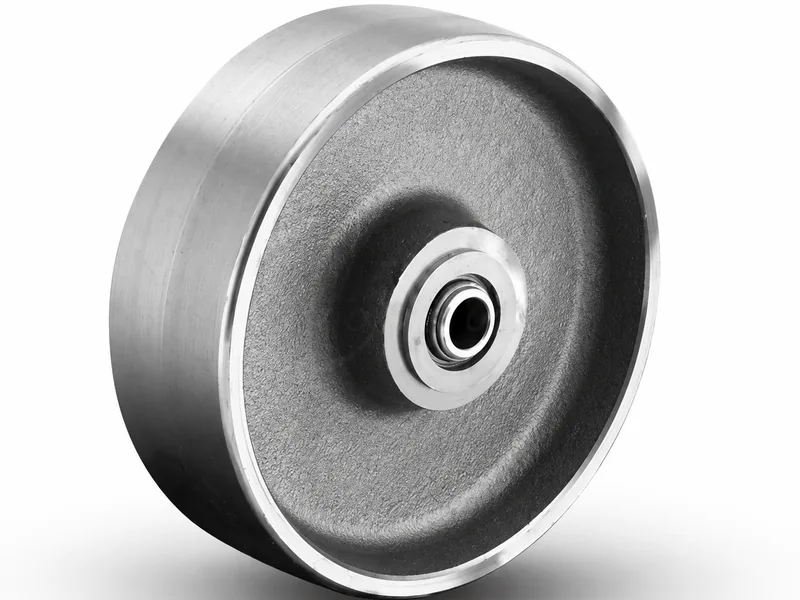
Product family
Forged Steel Caster Wheels
Forged steel wheels up to 2000 kg per caster for harsh floors and heat.
View specifications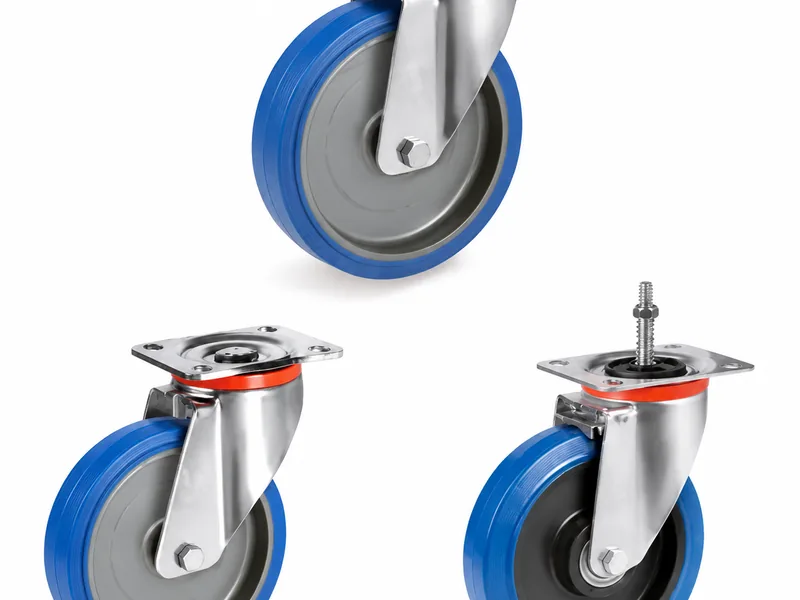
Product family
TPR (Thermoplastic Rubber) Wheel Casters
Third-party brand — supplied via our sourcing network
Sourced TPR wheel and caster references. Mapp Caster listings identify model-specific catalog part numbers and ratings; original manufacturers are not identified on the cited listings. See exact-item references in the product detail. The current checked sample contains nineteen seller items, not the supplier's complete range.
View specifications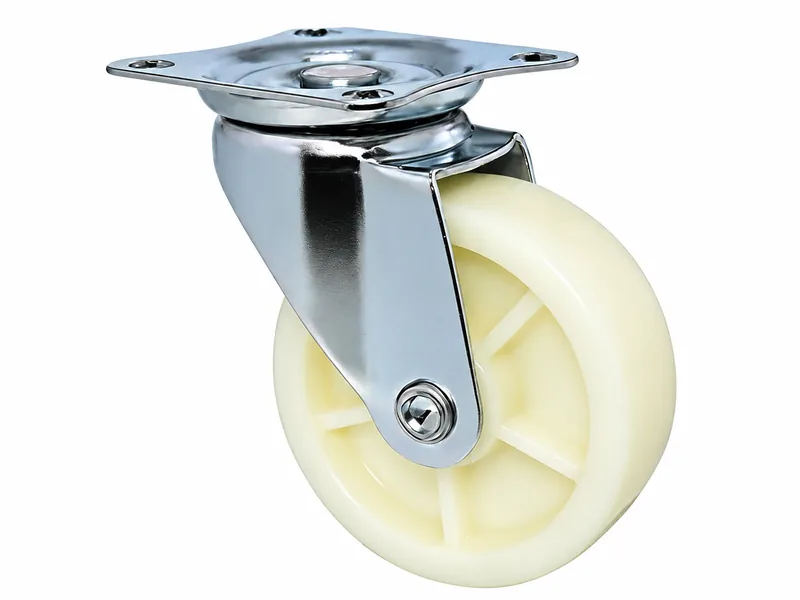
Product family
V-Groove Track Wheels
Third-party brand — supplied via our sourcing network
V-Groove track wheels are designed for use on inverted angle iron track and can also be used on flat surfaces. They feature a precisely machined 90-degree V-Groove with relief groove for load equalization and are available in materials such as cast iron.
View specifications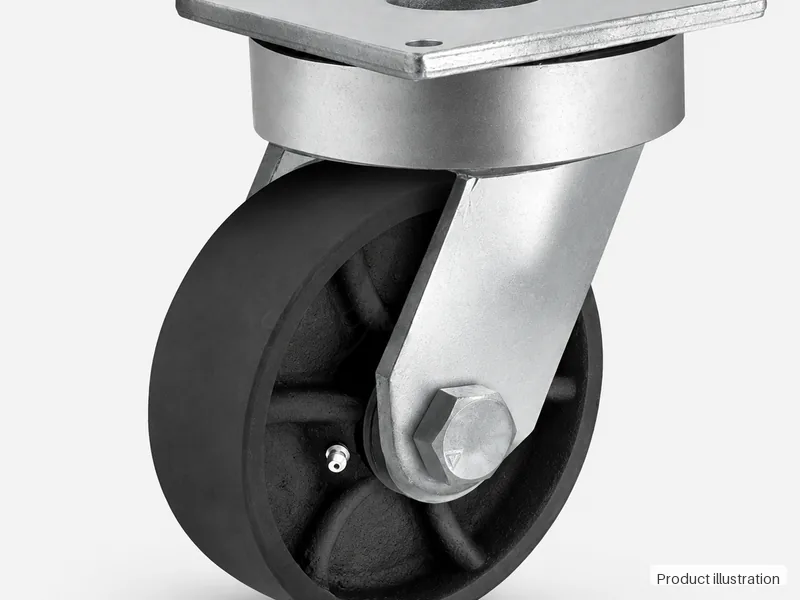
Product family
Cast Iron Caster Wheels
Third-party brand — supplied via our sourcing network
Cast iron caster wheels for high load, oven-adjacent duty and rough floors: near-zero rolling resistance and the lowest cost per kilo of the common tread materials, Ø 25–300 mm on our line.
View specifications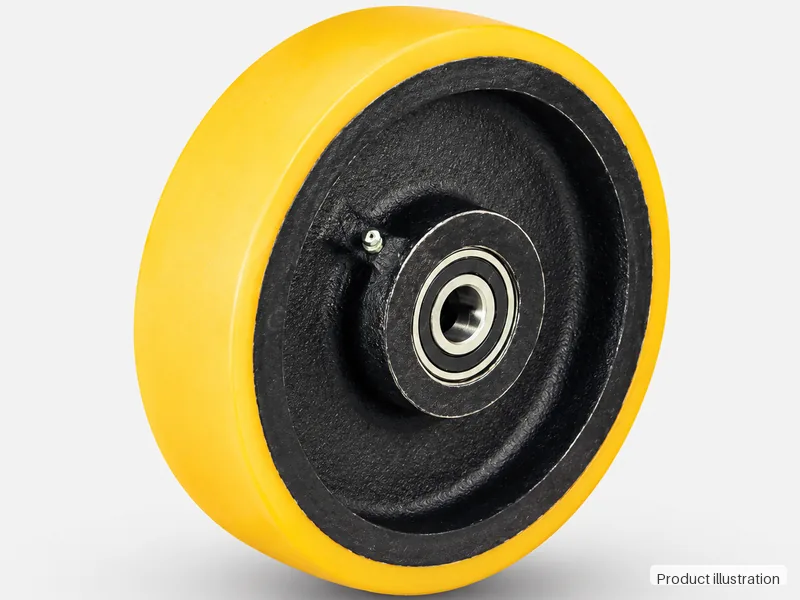
Product family
Polyurethane Wheels on Cast Iron Cores
Third-party brand — supplied via our sourcing network
Sourced polyurethane tread wheels bonded to cast-iron cores. Manufacturer-specific dimensions, ratings and options remain tied to the named manufacturer and exact model; no RollMaster cast-iron-core rating is published.
View specifications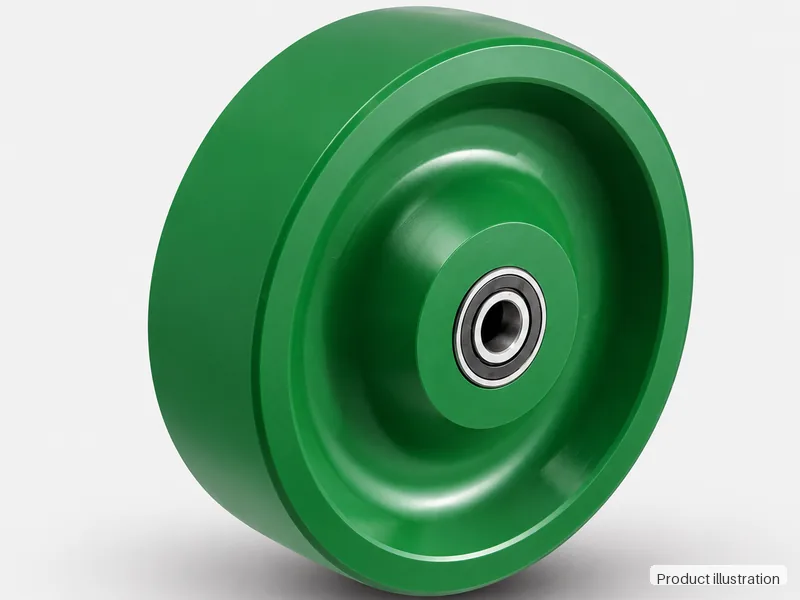
Product family
Polyurethane Wheels on Aluminum Cores
Third-party brand — supplied via our sourcing network
Sourced polyurethane tread wheels on aluminum cores. The lower-density core may reduce wheel mass, but finished weight, load limits and suitability are manufacturer- and model-specific; no RollMaster aluminum-core rating is published.
View specifications- Conductive Soft Rubber Wheels Conductive X-tra soft rubber wheels: the two published XY/XZ lines (200-675 lb flat tread, 450-500 lb round tread), what the conductive compound adds to a soft-rubber ride, and where the ESD specification must go beyond the wheel itself. Third-party brand — supplied via our sourcing network View specifications
- Ductile Iron Caster Wheels Ductile iron caster wheels: where they sit between cast iron and forged steel on load, temperature and impact toughness, published class reference values, and what an RFQ for them should state. Third-party brand — supplied via our sourcing network View specifications
- ESD Wheels (Conductive & Antistatic) ESD wheels for electronics, medical and chemical environments: the ANSI/ESD S20.20-2021 conductive vs dissipative resistance bands, why a conductive wheel alone is not a grounding system, the non-marking conductive construction trade, the published conductive-wheel load de-rate, and what to write into the RFQ. Third-party brand — supplied via our sourcing network View specifications
- Flanged Cast Iron Wheels Flanged cast iron wheels: how the flange keeps a cart on fixed track, the published FD and FL line bands (single flange 500-3,000 lb; double flange 500-2,000 lb, both -40 to +800 °F), bore and keyway options, and the track-wheel selection boundary. Third-party brand — supplied via our sourcing network View specifications
- Heat-Resistant Phenolic Wheels Heat-resistant phenolic resin wheels: how the macerated-fabric construction differs from standard phenolic, the published -65 to +475 °F service band, where capacity is not published and must be quoted, and what to specify for oven-side carts and racks. Third-party brand — supplied via our sourcing network View specifications
- High-Temperature Nylon Wheels High-temperature glass-filled nylon wheels: the HT and DT line bands (HT 800-1,400 lb at -20 to +480 °F; DT 800-1,600 lb at -20 to +350 °F), per-SKU hardness and application data, and where they sit against phenolic and metal at oven temperatures. Third-party brand — supplied via our sourcing network View specifications
- Laminated Phenolic Wheels Laminated phenolic wheels: the TL line’s published class attributes (-65 to +250 °F, Med/Low floor protection, Best rollability), the laminated-canvas construction behind the name, and why the capacity and size cells stay blank on the manufacturer chart. Third-party brand — supplied via our sourcing network View specifications
- Large Bore Wheels Large-bore metal wheels: the four published manufacturer lines (drop forged FH 6,000-20,000 lb, V-groove VH 6,000-15,000 lb, cast iron CW 6,000-8,000 lb, V-groove VL 4,000 lb), why bore and bearing choice moves the rating, and what to specify for tow lines and heavy fixtures. Third-party brand — supplied via our sourcing network View specifications
- Maxim Glass-Filled Nylon Wheels Glass-filled nylon wheels: the NG line band (700-1,500 lb, 3.25-10 in, -40 to +250 °F), the glass-filled nylon class behavior second publishers document (highest-load polymer, freezer first choice, poor floor protection), and the honest trade-offs before you RFQ. Third-party brand — supplied via our sourcing network View specifications
- Mold-on Rubber Wheels Mold-on rubber wheel constructions: published capacity and durometer bands for cast-iron-core and aluminum-core lines (250-2,570 lb), how the vulcanized bond works, and what to specify in an RFQ. Third-party brand — supplied via our sourcing network View specifications
- Neoprene Wheels Neoprene wheel material class: where it beats generic rubber (oils, chemicals, non-marking, varied floors), the bonded-on-core constructions it is published in, the honest capacity boundary, and what to specify in an RFQ. Third-party brand — supplied via our sourcing network View specifications
- Polypropylene Wheels Polypropylene (PP) caster wheels: where the class wins on cost, moisture and chemicals, what the glass-filled and hi-temp variants add, published capacity reference bands, and the noise trade-off to weigh before you order. Third-party brand — supplied via our sourcing network View specifications
- Press-On Polyurethane Wheels Press-on polyurethane wheels: the published OG lines (1,490-10,900 lb over 8.5-18 in, and the Mini line at 2,240-6,600 lb over 5-10.5 in), what the press-on construction is, and how it trades floor protection against the rubber press-on sister line. Third-party brand — supplied via our sourcing network View specifications
- Press-On Rubber Wheels Press-on rubber wheels: the published OA line (1,270-10,190 lb over 8.5-22 in, High floor protection), per-SKU second-publisher table rows from 160 to 610 mm, and how rubber trades rollability for floor protection against the polyurethane press-on sister line. Third-party brand — supplied via our sourcing network View specifications
- PU on Polypropylene Core Wheels Polyurethane wheels on polypropylene cores: the interlocked-tread construction and its adhesion logic, the published 600-1,200 lb band at 95 Shore A with −40 to +180 °F service, the sanitary and corrosive-area positioning, and how the PP-core construction compares with cast-iron and aluminum cores. Third-party brand — supplied via our sourcing network View specifications
- Semi-Pneumatic Wheels Semi-pneumatic wheels: the flat-free middle ground between air-filled pneumatic and solid wheels — published manufacturer class bands (200-540 lb), the monoprene no-flat constructions, the honest ride trade-off versus pneumatic, and what to specify in an RFQ. Third-party brand — supplied via our sourcing network View specifications
- Soft Rubber Wheels Soft rubber wheel constructions (performance soft-tread and mold-on-core lines): published capacity and durometer reference bands, the noise and floor-protection case, the compression-set flat-spot ceiling, and what to specify in an RFQ. Third-party brand — supplied via our sourcing network View specifications
- Solid Polyurethane Wheels Solid polyurethane and solid elastomer wheels: how the one-piece construction differs from bonded-tread wheels, published capacity reference bands, the material qualities that drive selection, and what to confirm at quotation. Third-party brand — supplied via our sourcing network View specifications
- Straight-Side Phenolic Wheels Straight-sided phenolic wheels: the two standard-resin line profiles (TH 1,000-1,500 lb at 4-6 in; TS 500-1,400 lb at 4-8 in), the phenolic material behavior they share, and where the general-purpose TM class is the better spread. Third-party brand — supplied via our sourcing network View specifications
- Vulkollan Wheels Vulkollan-class NDI polyurethane wheels: how the chemistry differs from standard cast PU, published capacity and temperature reference bands, the humidity and core-preparation caveats, and what to specify in an RFQ. Third-party brand — supplied via our sourcing network View specifications
- White Nylon Wheels White nylon wheels: the NW line band (600-1,100 lb, 5-8 in, -20 to +250 °F), the cleanability class second publishers document for sanitary and food-area service, and the per-SKU reality of the economical end of the nylon family. Third-party brand — supplied via our sourcing network View specifications